Give the Nutrition Question
A Score Worth Following.
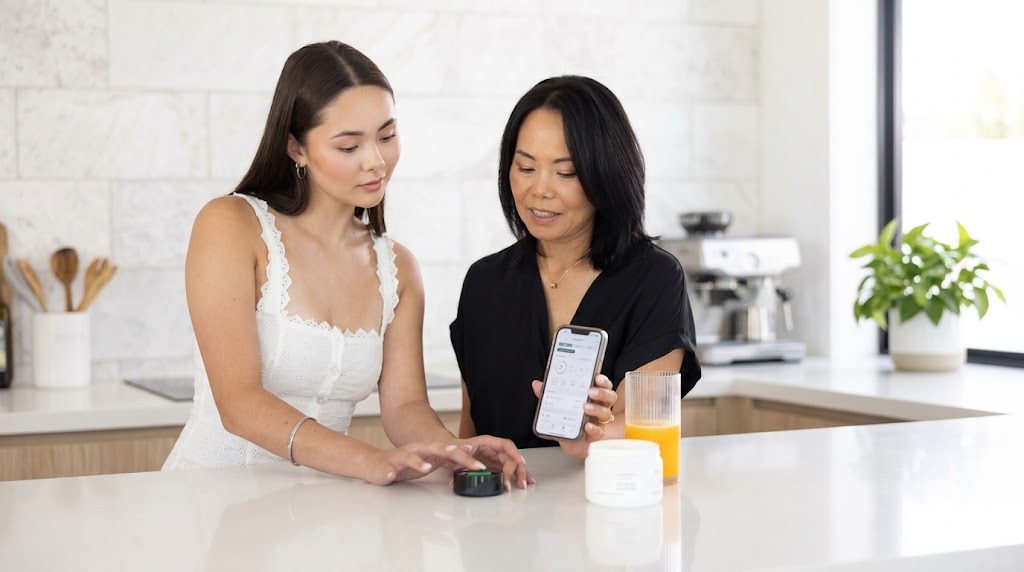
Someone in the room asks about vitamins, supplements or nutrition, and the appointment has ten minutes and a full list to get through. Prysm iO measures skin carotenoids, the colour pigments from fruit and vegetables, with a fingertip placed on the device for around 15 seconds, then shows a single figure in an app that the patient can follow and you can revisit at their next review. It is silent on any diagnosis, and your clinical judgement carries on undisturbed.
- Wellness insight only: no bearing on any diagnosis, medicine or treatment
- Small enough for a consulting-room shelf or the reception desk, and used with an app on a phone or tablet
Nothing scripted and nothing to sign: the call exists so you can decide for yourself whether a scanner deserves space in your practice.

Patients Ask About Nutrition. Ten Minutes Rarely Covers It.
Nutrition, vitamins and supplements crop up throughout general practice: following a blood test, at a long-term-condition review, during a health check, or as a parting question at the door. Time is short, so the reply is usually a sentence of general guidance and maybe a leaflet. Prysm iO does not disturb that. What it adds is a number for one narrow part of the topic, the amount of colourful produce on someone's plate, which the patient can follow on a phone and you can raise at a later visit. It is not a clinical test, sits outside every NHS service, and reveals nothing about a patient's conditions or medicines.

34.9 million
Appointments recorded across general practice in England in July 2026, per NHS England Digital (all staff roles) - a lot of conversations in which nutrition could come up
15 sec
Length of a single fingertip scan - brief enough for a gap between appointments or a spare corner of the practice
29%
Share of adults in England eating at least five portions of fruit and vegetables daily in 2022 (Health Survey for England, self-reported) - most people have room to improve
A Number to Start the Nutrition Conversation
Most patients would describe their own diet as fine - that is assumption, not a measurement. A skin carotenoid score gives the conversation something concrete to start from.
Part of a daily routine
Plenty of patients already take something daily as part of their routine. A consultation is a reasonable place to offer them a number to talk about.
A reading, not a guess
A 15-second scan gives a patient a real, personal starting point - their own carotenoid score, not a population average - and it fits naturally into a routine appointment.
Nu Skin's money-back policy
Nu Skin has a money-back policy on certified, Prysm-eligible products, subject to Nu Skin's Terms and Conditions.
Give a patient a number to talk about in the same appointment, and a range of products available if they would like to explore them.
What Is Actually in the Range
A low score tends to prompt the next question: what else might help their nutrition, beyond fruit and vegetables? Pharmanex products include carotenoids and everyday nutrients. Here is what the range contains, stated plainly, with no promise about anyone's health, medicines or conditions. Most surgeries sell nothing to patients, so this would be a new commercial element rather than a rival to anything you stock.

Carotenoids, including lutein
Bright plants such as leafy greens supply lutein, one of the carotenoids. Some products in the range contain it along with other carotenoids. Carotenoids are the pigments Prysm iO measures in the skin.
A fruit-and-vegetable beverage
JVi is a fruit-and-vegetable drink containing carotenoids and vitamin C, one option for someone who would like more colourful produce in their day.
DHA omega-3
Marine Omega is an omega-3 supplement supplying EPA and DHA to complement a varied, balanced diet.
Vitamins and minerals
LifePak is a multi-nutrient daily supplement providing vitamins and minerals to complement a varied, balanced diet.
The Research Behind the Range
Each Pharmanex formula passes through Pharmanex's 6S Quality Process: selection, sourcing, structure, standardisation, safety and substantiation. Pharmanex states that its research programme includes preclinical and clinical studies. Still, a person who scans, takes the products and re-scans will see how their own score changes over time.
Let the Score Do the Comparing
Is a patient already taking another product? Scan them first for a baseline. If they choose to try a Prysm-certified alternative, re-scan in the following weeks and let them see what happens. A rising score means the carotenoid level in the skin has gone up. If a patient changes their diet, lifestyle or supplements after a baseline scan, a sustained rise over several scans shows that those changes are working to raise their levels.
100 Million Healthy Households
Some people, parents in particular, will want a device at home so the household can scan and compare. Nu Skin's stated aim is 100 million healthy households, each with a Prysm iO and better shared habits around nutrition and supplements. If you ever offer someone a device, tell them you have a commercial interest, as you would with anything you recommend.
Where a clinician has advised a particular supplement, it changes only with that clinician's agreement. Anyone on prescribed medicines or living with a health condition should speak to their doctor, pharmacist or prescriber before starting one. The score is a wellness reading and never a reason to stop or swap anything a doctor, pharmacist or dietitian has recommended.
Food supplements are not a substitute for a varied and balanced diet, which should always come first. These products are not medicines and are not intended to diagnose, treat, cure or prevent any medical condition, and they do not replace medical assessment, diagnosis or treatment. Please check each product's label for its exact ingredients and amounts.
Four Points Any Careful Doctor Settles First
You hold GMC registration, patients weigh your advice heavily, and colleagues will want to know what you are up to and why. Sensible questions first, then: these are the four raised most often, with straight answers.
"Is there a conflict of interest if I earn from this?"
The GMC expects doctors to be honest in financial and commercial dealings and not to let an interest they hold shape how they prescribe for, treat or refer patients, and it publishes guidance on identifying and managing conflicts of interest (check its current wording on the GMC website). Earning from something you might mention to a patient sits inside that thinking. In practice: declare it whenever it arises, leave the choice wholly with the patient, keep it apart from prescribing, referral and clinical judgement, and be ready to say no if it does not feel right. The BMA also publishes guidance on transparency for doctors with competing interests. Some doctors will conclude that the honest answer is to run this only away from their own patients, and that is a reasonable place to land.
"Can the scan tell me about a condition or a medicine?"
No. Prysm iO reads the level of carotenoids in fingertip skin, a sign of the amount of colourful produce a person eats. It does not diagnose, screen for, monitor or predict any condition, and it cannot show whether a treatment is working. It is no replacement for assessment. If a patient takes prescribed medicines or has a diagnosis, any supplement is a matter to raise with their prescriber first, and one a clinician has advised changes only with that clinician's agreement.
"Will my practice, my contract and my indemnifier allow it?"
It depends where you sit. Partners set practice policy and answer to the partnership agreement and the NHS contract (GMS, PMS or your nation's equivalent); a salaried GP follows an employment contract and the partners' rules; a locum follows the host practice's; hospital, occupational-health and private-clinic doctors follow their employer's. Practices are regulated too (the CQC in England, other bodies elsewhere in the UK), and indemnifiers such as the MDU, MPS and MDDUS may have a view. Ask, and keep the answer in writing, before you begin.
"Practices don't usually sell anything to patients. Is this different?"
It is a change, and it is better to admit that plainly. A practice with nothing commercial on offer has a clean line, and a paid scan session shifts it. So the sensible set-up keeps sessions apart from appointments, run by a team member in their own slot, with patients never left feeling that their care depends on taking part, and with the partners agreeing to it together in writing beforehand. Some practices will decide it is not for them, and we would rather you reached that view before a demo than after a purchase.
One Fingertip, One Number, About a Quarter of a Minute
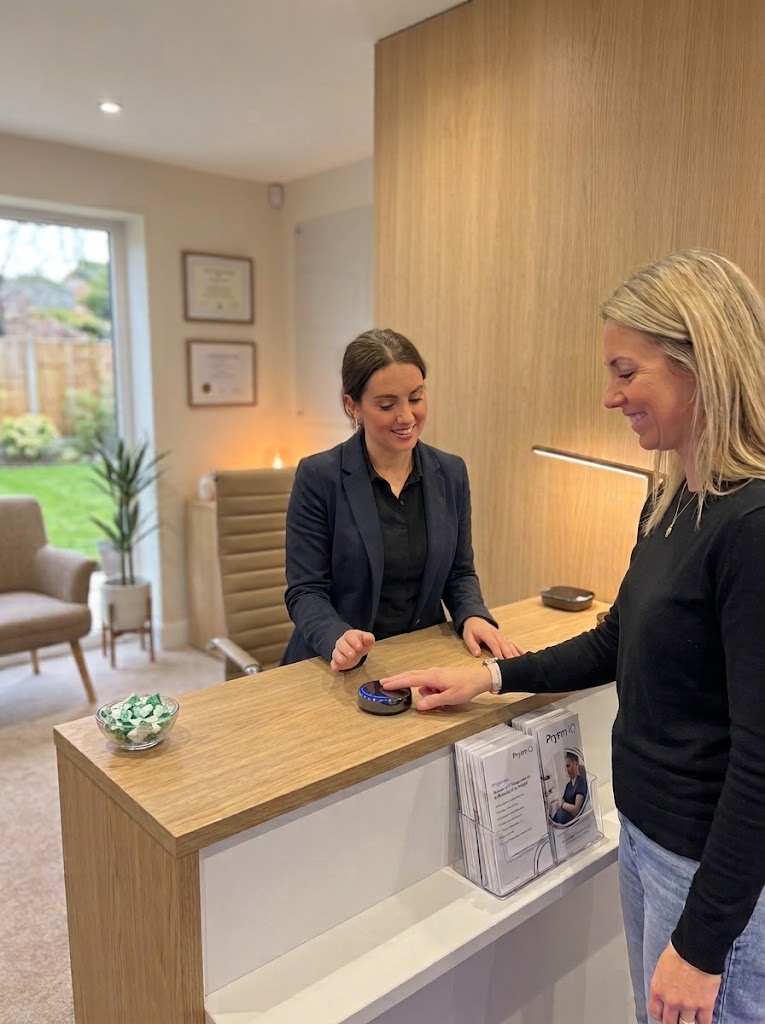
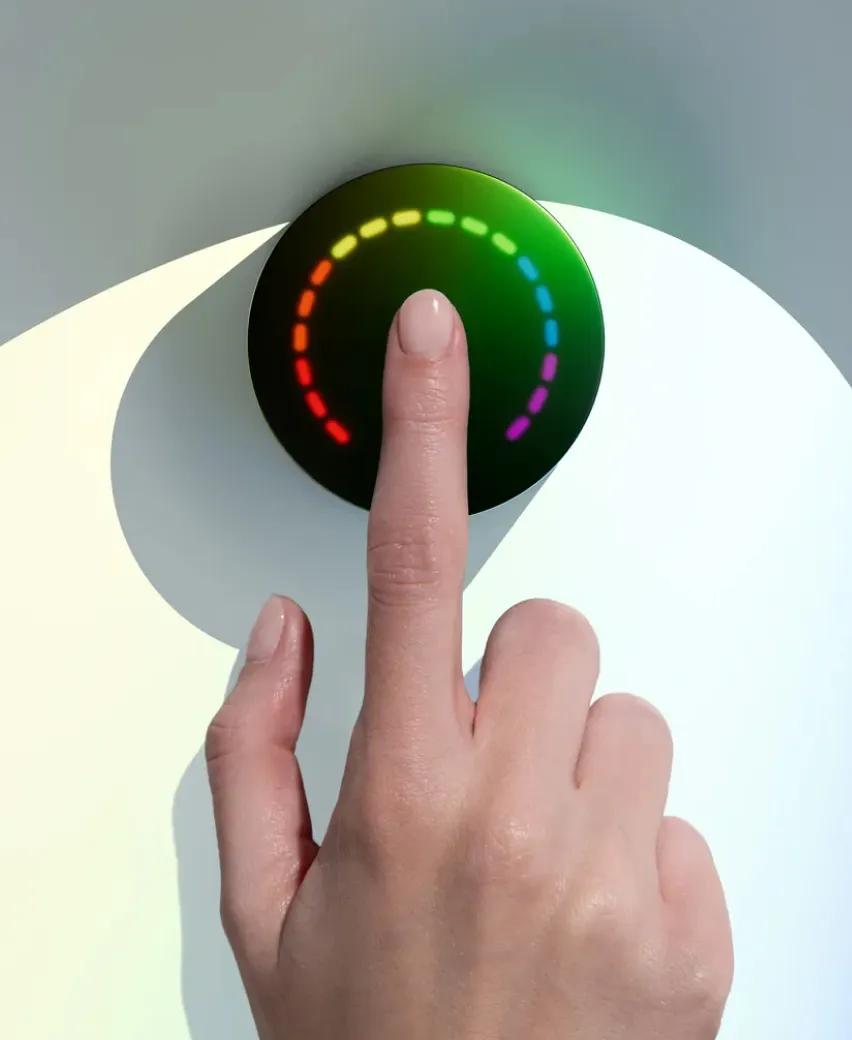
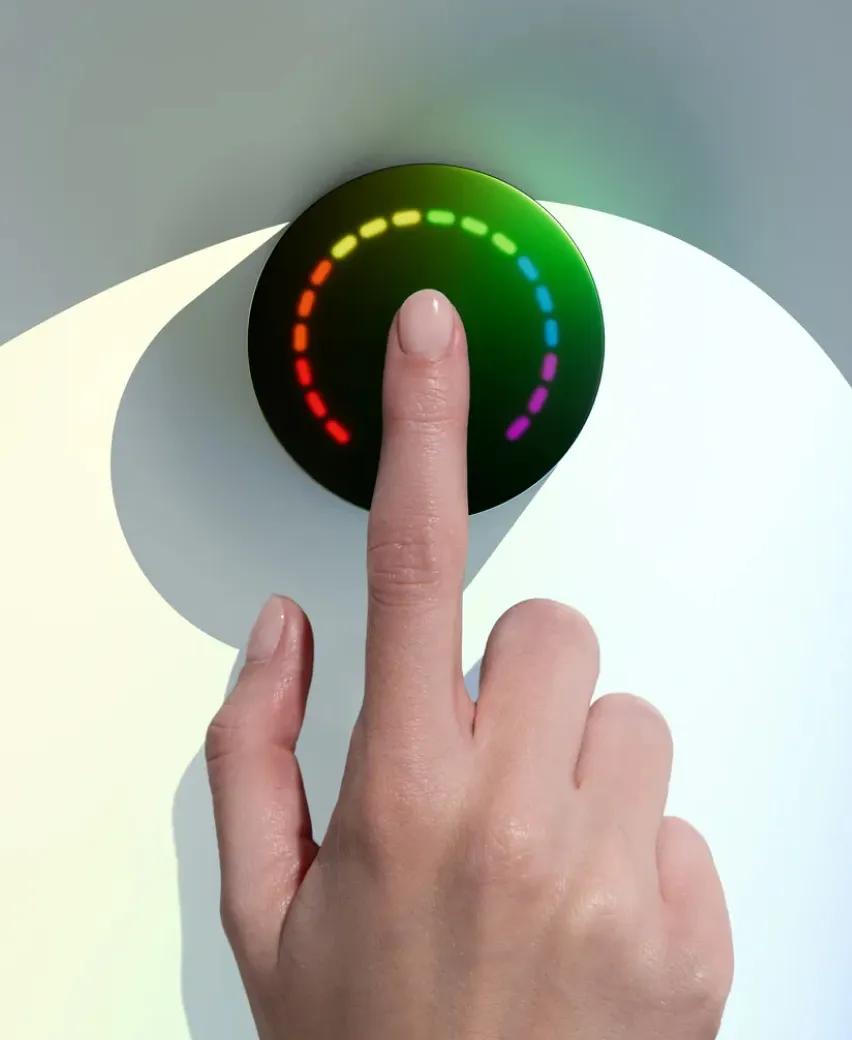
The measuring is done by light. A fingertip rests on the scanner, light passes across the skin, and roughly 15 seconds later a personalised wellness score comes up. No needles, sample pots or lab forms are involved, so it demands very little from a patient who came in about something else.
The outcome is a single figure that can be followed over time. It is not a clinical measure and reveals nothing about any condition or medicine, yet it is easy to put into words and easy to come back to, which suits a short conversation about nutrition at the close of a consultation or review.
Scans are always taken from a fingertip on the same hand, so one visit compares fairly with the next and a patient's trend carries meaning rather than jumping about. The device pairs with the Prysm iO app on an iOS or Android phone or tablet, which someone in the practice will need to install and learn. Beyond that, it is as at home on a reception desk as in a consulting room.
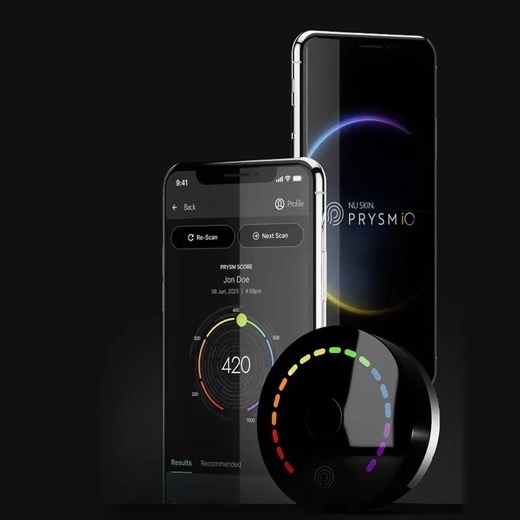
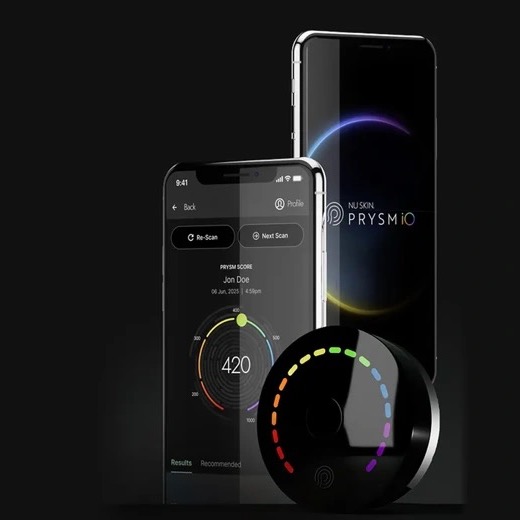
Prysm iO is a wellness insight tool. It is not intended to diagnose, treat, cure, prevent, or mitigate any disease or medical condition, and it is not a substitute for medical assessment, diagnosis or treatment, or for dietetic advice.
Done in Under a Minute
Brief enough to slot in between appointments or run from a quiet corner of the practice. There is no blood sample, no lab request and no wait for results to come back.
Spectral Rai Technology
With a fingertip on the scanner, tens of thousands of separate light measurements are captured through hyperspectral absorption, picking up carotenoid-related activity in the skin.
One Score
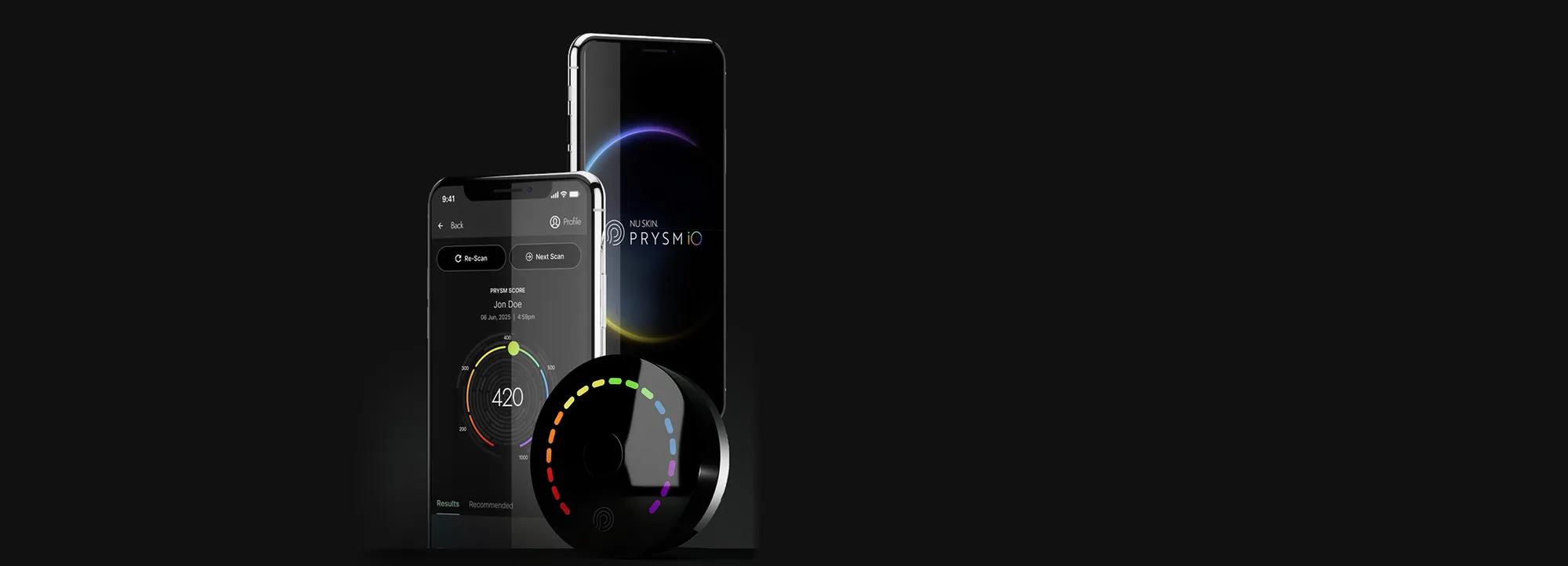
An AI model turns those readings into a single Prysm Score from 100 to 1000. Nothing needs interpreting from a printout: it is one figure a patient understands immediately.
A Reason to Return
Between visits patients follow their score in a linked app, which keeps nutrition advice in front of them and gives you or a colleague a simple way to ask how it is going.
Research Behind It
Pharmanex (a division of Nu Skin) reports more than 20 years of research on skin-carotenoid scanning, and holds 18 global patents on the technology.
Give Nutrition
a Score to Chase.
Plenty of patients intend to improve their nutrition yet have little to show for it. Prysm iO gives them a score between 100 and 1000 in a companion app, a figure to track between appointments and one you or a colleague can raise next time. It is a wellness score based on skin carotenoids, and it says nothing about a specific condition or how a treatment is going.
A Number for Something That Has None
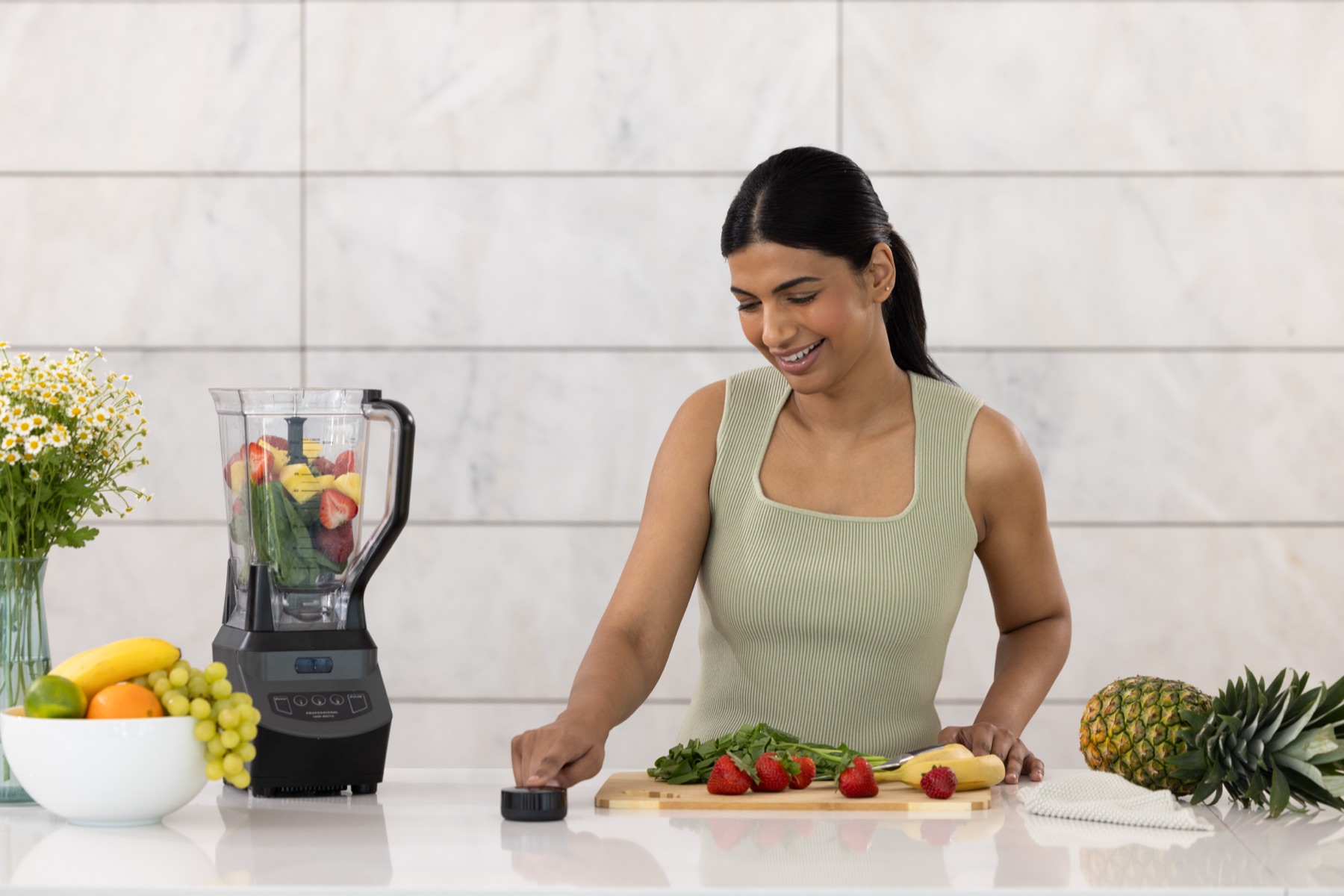
Consulting rooms are full of numbers, yet everyday nutrition rarely gets one. A skin carotenoid score is a wellness number a patient can follow as they change their diet. It says nothing about their health or any condition.
Reviews Make Natural Re-Scan Moments
Patients come back for long-term-condition reviews, NHS Health Checks, medication reviews and follow-ups, and lifestyle is often already on the agenda. Scanning again at one of those visits puts an earlier and a later result together. Keep the scan clearly apart: it is not part of any NHS service, it replaces none, and it should never be described as if it did.
A Hopeful Thread
Much of general practice is about what has gone wrong. A score a person owns and can follow as they add colour to their meals is a more hopeful subject, and it stays clear of their diagnoses and prescriptions.
Worth being precise about: the score is a wellness score based on skin carotenoids. It is not a measure of any specific condition, and a change in it is never evidence that a treatment or medicine is working better or worse. That distinction is worth making plainly, and it is best coming from you.
Six Places This Could Sit in a Doctor's Week
Doctors work as GP partners, salaried GPs and locums, in private clinics, hospitals and occupational health, alongside practice teams of every shape. See whether any of these matches how your own week is arranged.
GP Partners and Practice Owners
Partners set the practice's policy, decide what sits alongside NHS work and answer for it under the partnership agreement and NHS contract. A team member can run sessions without touching clinical time, though declaration and patient choice remain for you to agree with your partners.
Salaried GPs
A salaried GP works to an employment contract and the partners' policy. Only consider this with the partners' written agreement, and only if you would be comfortable declaring it every time it arises.
Locums and GP Registrars
Locums work to the host practice's rules and registrars to their training programme's, so the sensible starting point is well clear of patient contact, if at all, and only with permission.
Practice Managers and Practice Teams
A practice manager, HCA, practice nurse or receptionist can staff paid 15-minute scan sessions in a spare room or quiet slot without taking clinicians' time. Treat it as a wellbeing extra separate from appointments, prescriptions and care.
Private GPs and Clinics
Private GP surgeries, occupational health services and wellness or aesthetic clinics already see people wanting a fuller talk about nutrition. Whether a scan suits depends on the service, the owner's policy and how the clinic is regulated.
Hospital Doctors and Talk-Givers
Hospital and community doctors follow their employer's rules, and many will keep this well away from clinical work. Doctors who speak at community evenings, workplace wellbeing days or school and club events can give an audience something to try that has no connection to their own patients.
Sound like you?
If so, a brief demo lets us give an honest opinion on whether it suits your practice or setting.
Recurring Income, and the Duties Attached.
Should a person choose to subscribe to a product following their scan, commission is paid on each repeat shipment while the subscription continues, whether or not they book another appointment. For a doctor the manner of earning it counts for more than the size. It is at its most defensible when your interest is on the table, a patient's prescribing, referral and care are untouched, the person can freely say no, and the score is explained candidly as a broad wellness figure. Run like that, it can co-exist with clinical work without pulling against it.
Say So Every Time
Each time Prysm iO comes up with a patient or anyone else, tell them you earn from it. GMC guidance expects honesty in financial and commercial dealings and interests that never influence how you treat, prescribe for or refer patients, and an unstated interest is the quickest route to losing someone's trust. Openness makes the conversation easier as well.
Their Choice Alone
These are wellness supplements rather than medicines. Nobody should be pushed towards them by what you might earn, or away from a treatment, and none of them should stand in for medical care. A patient who declines should see no change in how you look after them. Anything taken with prescribed medicines goes to you or their prescriber first, and a supplement a clinician advised changes only with that clinician's agreement.
Renewals Stay With Us
Billing, delivery and account queries land with us instead of on your reception desk, so no one at the practice chases payments or traces parcels. Your only involvement is seeing commission arrive after each repeat shipment.
Check the Paperwork First
Your partnership or employment agreement, your NHS contract (GMS, PMS or your nation's equivalent), the integrated care board or health board, your practice regulator and your indemnifier (MDU, MPS, MDDUS or another) could each restrict promoting products or earning commission. Work out which apply and ask in writing before you start. Regulation is outside what we can advise on, so check instead of assuming.
What Could This Add Alongside Your Clinical Work?
Enter figures that reflect how you could realistically run scan sessions and watch how scan fees, retail profit and commission might accumulate as subscribers build up. It is a way to test your own assumptions, not a forecast.
Every figure comes from scans that are carried out and the subscriptions people then choose to take up. The 5-year figure assumes 10 scans a week, every week, without a break, and most people will not keep that up for five years. The real constraint is finding enough people to scan in a setting where that is appropriate. Income of this kind should be openly declared. Whether and how you use Prysm iO with your own patients is for you to settle against GMC guidance, your NHS contract terms, your practice or employer's policy and your indemnifier before you rely on any of these figures.
Your Numbers
Recommended minimum: £10
Typical Subscription Take-Up
These starting percentages reflect what we typically see when someone with a lower score chooses a product from the range below - adjust them up or down if the people you scan behave differently. Nobody should be pushed towards a purchase.
After 6 Months
260 total people scanned
40% converted to subscribers
One-Off (Scans) / Year
£5,200
Recurring (Subs) / Year
£47,548
Total Annual Income
£52,748
After 12 Months
520 total people scanned
40% converted to subscribers
One-Off (Scans) / Year
£5,200
Recurring (Subs) / Year
£104,736
Total Annual Income
£109,936
After 3 Years
1,560 total people scanned
40% converted to subscribers
One-Off (Scans) / Year
£5,200
Recurring (Subs) / Year
£316,175
Total Annual Income
£321,375
After 5 Years
2,600 total people scanned
40% converted to subscribers
One-Off (Scans) / Year
£5,200
Recurring (Subs) / Year
£530,671
Total Annual Income
£535,871
Illustrative only, based on the figures you enter and assumes subscriptions once taken up continue without cancellation. Actual earnings depend on individual effort, subscriber retention, and market conditions, and are not guaranteed. Doctors are responsible for declaring financial interests and for following GMC guidance, their NHS contract terms and the policies of their practice or employer, and their indemnifier.
“A doctor is right to ask what a number rests on before mentioning it to a patient.”
Three points support it. Skin carotenoids have long been used by researchers as an indicator of fruit and vegetable intake. Pharmanex has put two decades into the scanning technology built into the device. And Prysm iO has collected a Technology Innovation award (TITAN Business Awards), a Wellness Insight award (Globee Business Awards) and a Good Design Award. It is a wellness tool and never a clinical instrument, but those three facts let you answer plainly when a colleague or patient asks what lies behind it.
Yale Researchers Studied the Underlying Science
A Yale School of Public Health team studied skin-carotenoid scanning, and its 2013 paper called skin carotenoid status “an attractive biomarker for use in human studies.” That paper concerned earlier-generation devices, not Prysm iO.
Read the full research20+ yrs
Pharmanex reports more than 20 years of research on skin-carotenoid scanning, from the original BioPhotonic Scanner to Prysm iO
18
Global patents covering the scanning method itself
25M+
Scans already completed worldwide on earlier-generation devices
2025
Achievement in Technology Innovation (TITAN Business Awards), Wellness Insight (Globee Business Awards), and a Personal-category win at the Good Design Awards
Talks and Events Where Nobody Is Your Patient
Doctors are asked to speak at community evenings, workplace wellbeing days, school and club events and health-awareness weeks, and some run wellness or occupational-health sessions for employers. A device on the table hands the audience something to try, and spares you the discomfort of pitching to a person whose care you are responsible for.
The Device Draws People In
A small scanner ringed with light, placed on a table at a community talk, a workplace wellbeing day or a health-awareness stall, pulls people over to find out what it is.
The Result Speaks for Itself
Everybody leaves holding a real number and a line on what it stands for. That keeps people engaged far longer than a leaflet on nutrition, and the chat remains on general wellbeing, never on medicines or conditions.
Follow-Up Only If Wanted
Anyone wanting more can leave their details after agreeing to be contacted. Nobody gets a cold call and nobody is signed up to something they never requested.
Planning a talk, stand or event?
Describe the plan and we will give you an honest opinion on whether a scanner belongs there.
Two Steps. That's It.
Devices start at £333, so a drawn-out sales pitch would be disproportionate. Book a demo, raise any question, and take as long as you need.
Already Sold? Just Order It
Certain where it would fit and comfortable with the price? Head directly to the secure checkout further down this page.
Still Deciding? Book a 30-Minute Demo Call
Choose a slot that suits your clinic timetable - no form to fill in first and no waiting on a reply.
You Decide
We show you the device and the research behind it, and explain how other health professionals approach declaring an interest. Nothing is scripted, and the call never turns into a hard sell.
Pick Your Starting Point
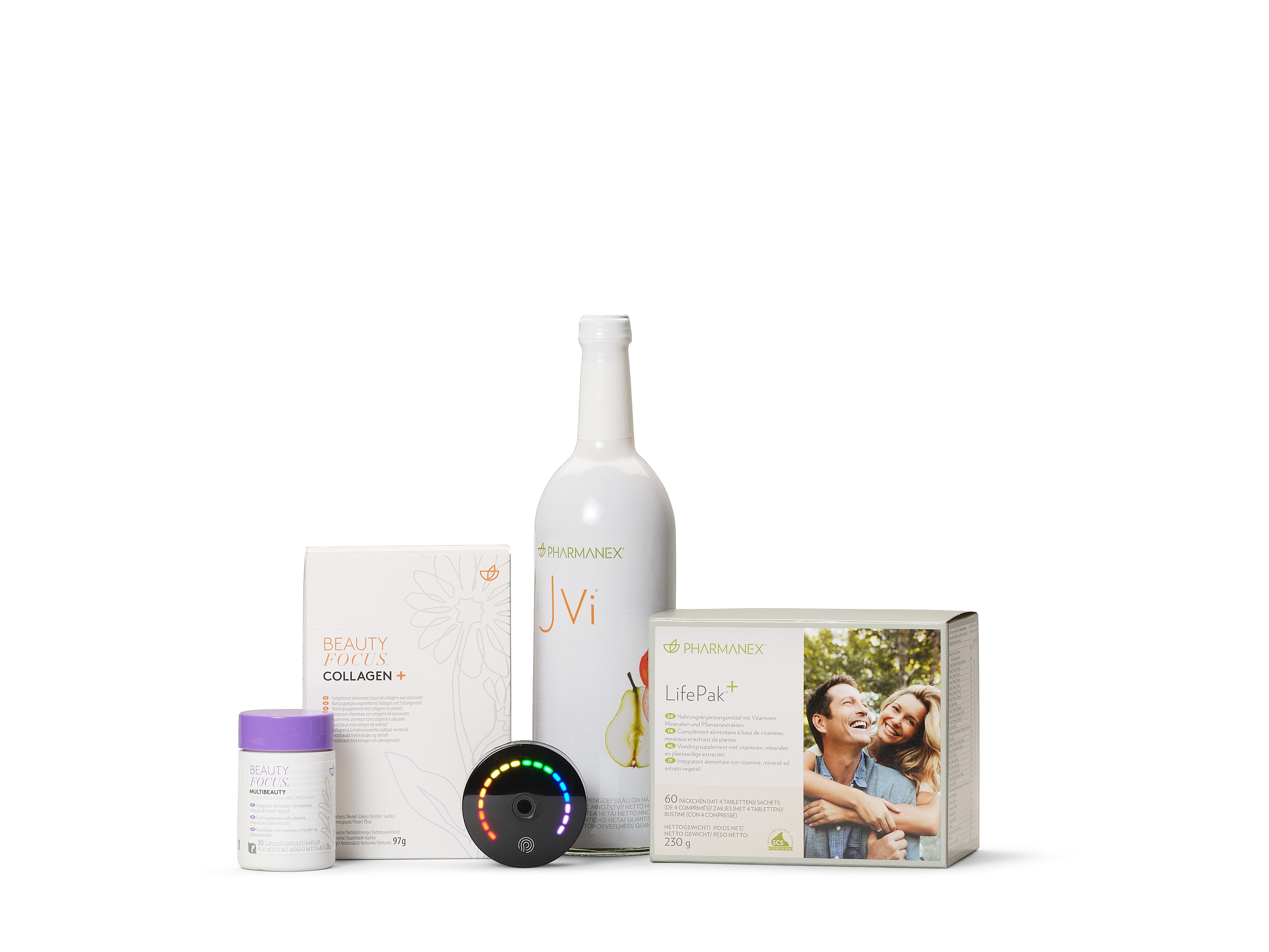
Go all in with the complete wellness bundle, or start lighter with the Mini Starter-Kit. Checkout is secure and handled right here on this page.
Nu Skin money-back policy - Nu Skin offers a money-back policy on certified Prysm-eligible products, subject to Nu Skin's Terms & Conditions.
Complete Wellness Bundle
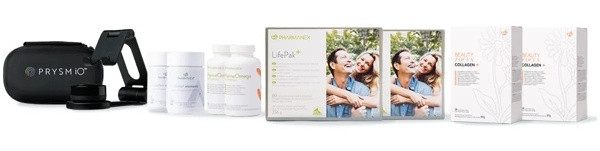
The device with a full Pharmanex nutrition stack, so you can scan and, where it suits, go through the range in the same session.
- 1x Prysm iO Device (with 1x LifePak Elements)£333
- 1x Professional Stand & Case£66
- £38
- £220
- £182
- £129
The device also includes a calibration disc, microfiber cleaning cloth, and USB-C charging cable. A second LifePak Elements below brings the total to 2.
Secure checkout powered by Stripe
Prysm iO Mini Starter-Kit
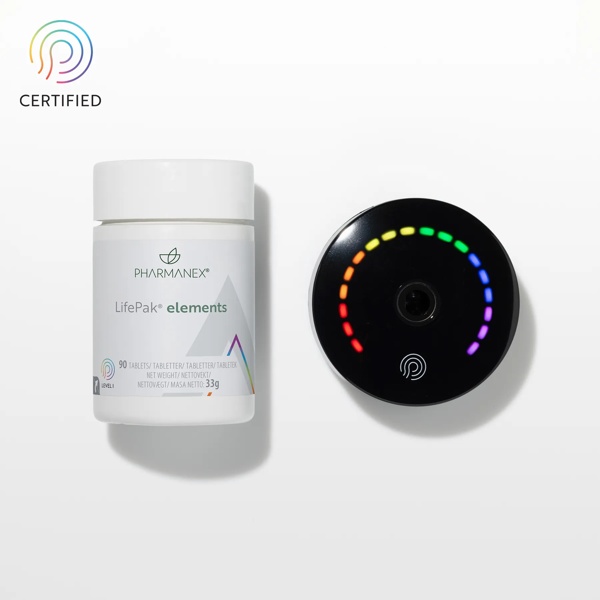
Just the scanner, with a calibration disc, microfiber cleaning cloth, USB-C cable, and one LifePak Elements (90 tablets) to get you started. No stand, case, or wider bundle.
£333
What Doctors Ask Before Anything Else
The points doctors raise most on a first call, awkward ones included.
Carotenoids are the natural yellow, orange, and red pigments found in colourful fruits and vegetables - think carrots, sweet potatoes, and leafy greens - and researchers use skin carotenoids as one indicator of fruit and vegetable intake. Prysm iO reads carotenoid-related activity through a simple fingertip placement, using optical scanning rather than a blood draw. Those readings become a single nutritional wellness score in around 15 seconds - something people can track over time as their diet, supplements, or lifestyle change.
No. It measures carotenoid-related activity in fingertip skin and nothing more. It does not screen for, diagnose, monitor or predict any condition, and it cannot show how a medicine or treatment is going. Describe it to patients as a wellness insight tool and no more. Whatever touches a patient's medicines, condition or treatment stays with their doctor or prescriber.
You need to settle that against GMC guidance, which applies to doctors across the UK: honesty in financial and commercial dealings, no interest allowed to affect how you prescribe for, treat or refer patients, and patients coming first. Your NHS contract, partnership or employment agreement, the practice's policy and your indemnifier (MDU, MPS, MDDUS or another) may add limits, and regulatory advice is beyond what we can give. The habits are familiar ones: state the interest each time, leave the decision with the patient, keep income out of clinical choices and never press. Some doctors use Prysm iO only away from their own patients, at community talks and workplace events, or through a colleague in a separate session, and that is entirely sensible.
It might, and that is worth thinking through before anything else. A practice with no commercial offering has a clean line, and a paid scan session moves it. The partners should agree it together in writing, sessions should sit apart from appointments, and nobody should feel their care depends on taking part. If the partners would rather keep the practice entirely non-commercial, running Prysm iO privately or at events away from patients is the alternative.
Running a scan needs no nutrition qualification: the score explains itself, and there is no certificate, CPD unit or insurance add-on to complete first. Stay inside your own scope of practice when discussing a result and keep to general wellbeing, not anyone's medicines or conditions.
No. It is a wellness insight tool, not a medical device, and it is not intended to diagnose, treat, cure, prevent, or mitigate disease or any medical condition. It does not replace medical assessment, diagnosis or treatment, or professional dietetic advice.
It varies by setting. A practice might offer paid scan sessions away from appointments and repeat one a few weeks on, a private clinic might add it to a wellbeing service, and hospital or occupational-health doctors might keep it entirely separate for talks, employer wellbeing days and awareness events. Whichever applies, agree in advance what you will say and how the interest gets declared.
Very little of yours. A receptionist, HCA or other practice colleague usually runs the sessions, so appointments carry on as normal. A typical session is a paid 15-minute slot, because it covers more than the 15-second scan: what the score means, why a lower score is worth working on through nutrition and lifestyle, and, where it suits the person, the products available. They can decline any recommendation, and the commercial interest should be declared to them clearly. Anything touching a patient's medicines, condition or treatment stays with the doctor, and none of this replaces medical advice. We take you through the science and how to introduce it as part of getting set up.
Someone reads it within 1-2 business days and, if it looks like a fit, gets in touch to arrange a short demo - no obligation, just a chance to see the device and ask questions before deciding anything.
Perhaps. Prysm iO is sold in 45 countries, so if you work elsewhere and are curious, get in touch and we will look at what can be done. Medical regulators abroad take differing views on financial interests, and the GMC guidance mentioned here relates to UK registration.
It is used only to review your enquiry and get in touch about Prysm iO - never sold on, and never used for unrelated marketing or passed to third parties for unsolicited promotions. You can ask for it to be deleted at any time; see the privacy notice in the footer for details.
Ready to Find Out More?
Fill in the form and we'll get back to you within 1-2 business days - or, just click to book a call at a time that works for you. The first chat is simply about understanding how your practice or team runs and answering whatever questions you have - nothing more.
We take your privacy seriously. What you submit here is used only to review your enquiry and get in touch about Prysm iO - never sold, never used for unrelated marketing, and deletable on request at any time.